
U bent hier
Feed-aggregator
The largest marine reptile ever could match blue whales in size
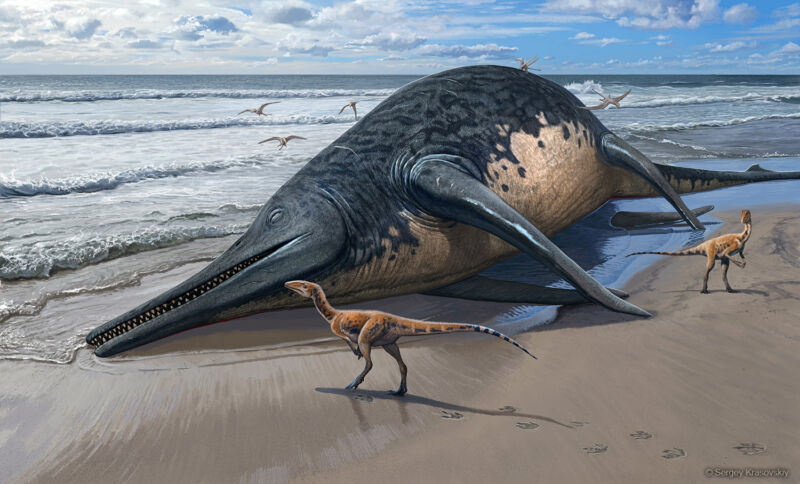
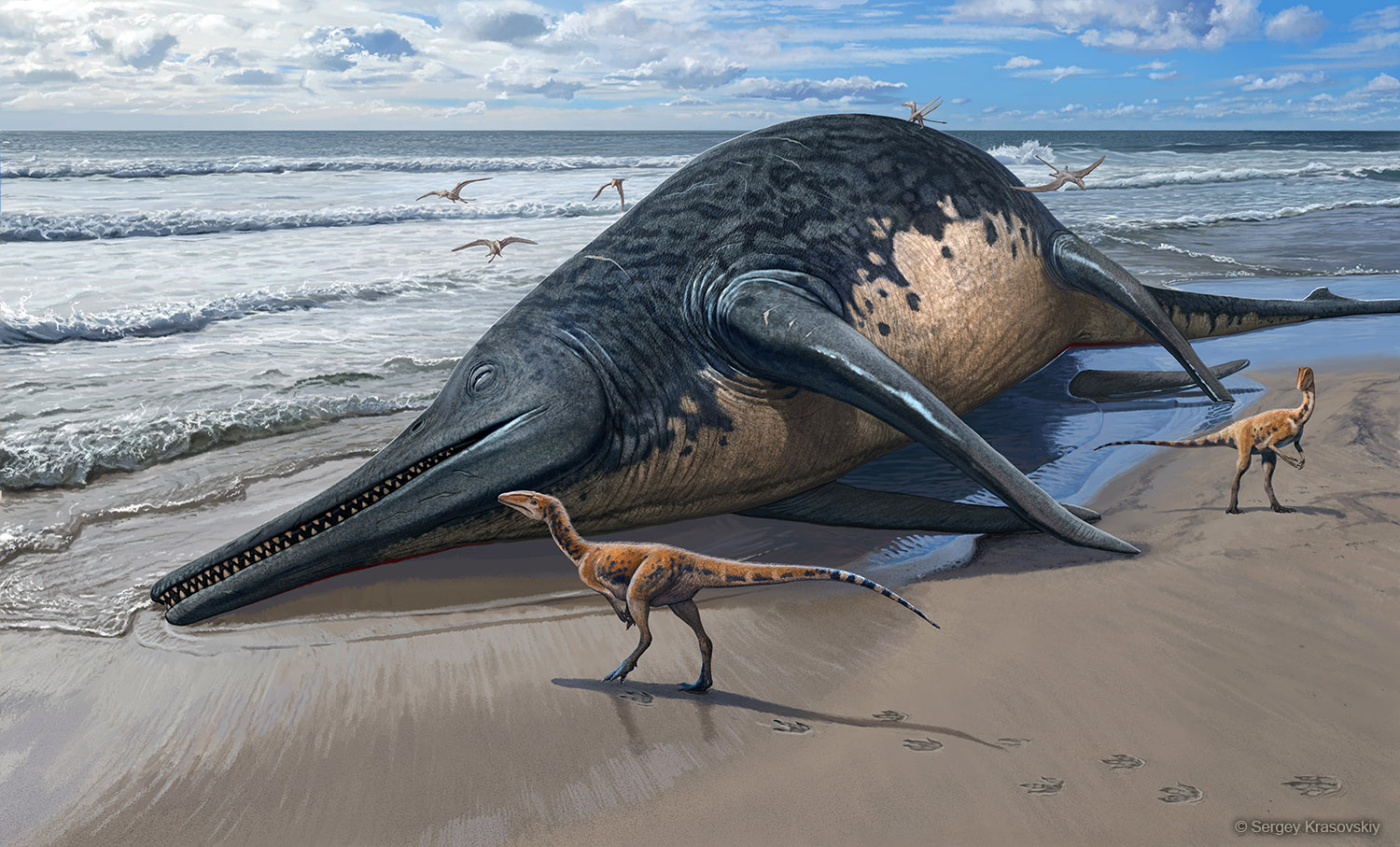
Enlarge (credit: Sergey Krasovskiy)
Blue whales have been considered the largest creatures to ever live on Earth. With a maximum length of nearly 30 meters and weighing nearly 200 tons, they are the all-time undisputed heavyweight champions of the animal kingdom.
Now, digging on a beach in Somerset, UK, a team of British paleontologists found the remains of an ichthyosaur, a marine reptile that could give the whales some competition. “It is quite remarkable to think that gigantic, blue-whale-sized ichthyosaurs were swimming in the oceans around what was the UK during the Triassic Period,” said Dr Dean Lomax, a paleontologist at the University of Manchester who led the study.
Giant jawbonesIchthyosaurs were found in the seas through much of the Mesozoic era, appearing as early as 250 million years ago. They had four limbs that looked like paddles, vertical tail fins that extended downward in most species, and generally looked like large, reptilian dolphins with elongated narrow jaws lined up with teeth. And some of them were really huge. The largest ichthyosaur skeleton so far was found in British Columbia, Canada, measured 21 meters, and belonged to a particularly massive ichthyosaur called Shonisaurus sikanniensis. But it seems they could get even larger than that.
The 2024 Mercedes E 350 4Matic is the thriftiest luxury workhorse

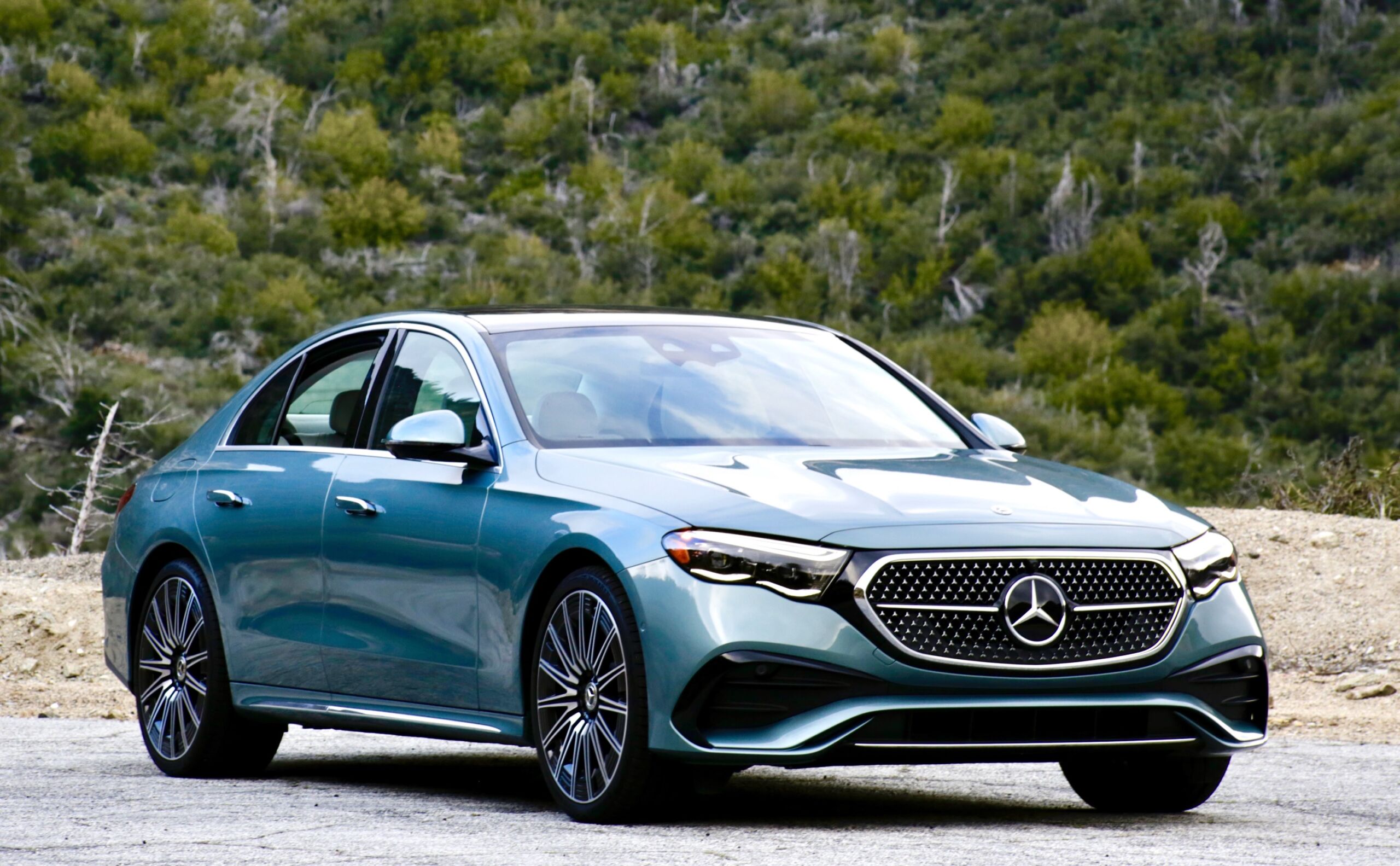
Enlarge / The Mercedes-Benz E-Class is the brand's workhorse, covering millions of km a year ferrying German taxi passengers around. (credit: Peter Nelson)
Mercedes-Benz's E Class badge possesses a lot of canon. When asked to picture a '90s-or-newer Mercedes full-size sedan, it's hard not to conjure up mental snapshots of W124-and-up generations schlepping around well-heeled suburban communities. I bet a lot of folks also picture the taxi lineup outside any German train station, too.
Well, at least I do. But I'm not talking about envisioning surly Munich cabbies but rather the faithful four-doors they putter around in. A lot of them are E Classes, which further proves that the cars have always been quintessential Mercedes luxury workhorses.
The brand-new 2024 E 350 4Matic, with its thrifty turbo-four powerplant, might have the most direct lineage in the US market to those cream-colored rickety diesels. It's easy on fuel for its size and ready to soak up all the miles across both traffic-ridden cityscapes and high-speed stretches of highway. And with its expansive suite of tech and mild hybrid propulsion, it's an overall great next chapter for the badge.
Fragmente aus dem 6. Jahrhundert werden in Klagenfurt ausgestellt
Wie sinnreich: das Digitalisat von PE 48 via https://manuscripta.at/?ID=46470 ist für kommerzielle und wissenschaftliche Zwecke unbrauchbar, da ein Teil des Textes mit einer Besitzkennzeichnung abgedeckt wurde.

Blast from the past: Fun with the smear merchants at "Campus Watch" and Daniel Pipes
LastPass waarschuwt gebruikers voor telefonische phishingaanval
"We are not a school--we are a hospital with a football team"
1992-95: Was einstige Geheimakten über die fast vergessene Nato-Russland-Annäherung verraten
Radfahrer-Zeitschriften in der Magenta-Cloud
https://grmsv-moers.de/rkb-zeitschriften-archiv-ist-online
Keine zukunftssichere Lösung!
In der Kaufbeurer Innenstadt entsteht das historische Archiv des Bezirks Schwaben
Die Klinken (so mehrfach im Artikel) übergeben dem ab Oktober geöffneten Archiv der kommunalen Gebietskörperschaft ihre Bestände.
Barcelona-Declaration für offene Forschungs-Metadaten
Kontrafaktischer Test für Plagiate?
https://www.insidehighered.com/opinion/views/2024/04/16/new-way-think-about-plagiarism-opinion
“[A] particular instance of plagiarism is wrong to the extent that removing it from history would make a big difference.”
Wie geht man mit Plagiaten und anderen zurückgezogenen Arbeiten um?
Am 12.4. kam eine Pressemeldung der ZB MED heraus: “ZB MED-Suchportal LIVIVO macht zurückgezogene Publikationen deutlich erkennbar”. Dagegen ist nichts einzuwenden.
Sehr wohl habe ich Bauchschmerzen bei der Praxis von Bibliotheken, die aberkannte Dissertationen nicht nur in den Katalogen kennzeichnen, sondern auch für die Benutzung sperren.
“Schon seit langem versieht die DNB ihren Katalog bei Gradentzügen mit einer Anmerkung, zudem entfernt sie die Kennzeichnung als Hochschulschrift. So heißt es bei der ersten Dissertation des früheren CSU-Politikers Karl-Theodor zu Guttenberg: „Ursprünglich als Dissertation veröffentlicht, Doktorgrad wurde am 23.02.2011 entzogen.“ In manchen Fällen wird ein Buch für die reguläre Benutzung gesperrt. Für eine Einsichtnahme muss dann ein besonderes Interesse dargelegt werden. Dies gilt beispielsweise bei einer medizinischen Arbeit über die Rolle von Homocystein bei der Kohlenmonoxid-induzierten Erythropoetinsekretion in der Niere. Der Autor hat seinen Doktorgrad inzwischen auf der Praxiswebsite gelöscht, auf diversen Gesundheitswebseiten wurde er zuletzt noch als „Dr. med.“ geführt. Auf Nachfrage dieser Zeitung haben die Gemeinnützige Stiftung Gesundheit und zwei Kinderarztportale den Eintrag korrigiert. Internet-Portale erfahren auch weiterhin nicht automatisch über Gradentzüge.
Obwohl Nordrhein-Westfalen und Bayern nicht zu den zehn Bundesländern gehören, die sich auf das neue Verfahren geeinigt haben, gibt es auch dort Reformmut. Auf Nachfrage der F.A.Z. hat die Ruhr-Universität Bochum einen Hochschulschriftenvermerk aus dem Bibliothekskatalog gelöscht. Die Arbeit zu „Fahrsimulatoruntersuchung und Vigilanztests bei Patienten mit obstruktivem Schlafapnoe-Syndrom vor und unter CPAP-Therapie“ ist gesperrt; ein Hinweis ergänzt, dass der Doktorgrad am 28.11.2012 entzogen wurde. Bei der Deutschen Nationalbibliothek war dieser Hinweis bereits seit Jahren zu finden. Plagiatsbehaftete Dissertationen waren auch an der Universität Würzburg jahrelang noch zugänglich. Nun wurden sie gesperrt. Eigentlich hätte man erwarten dürfen, dass die Universität schneller reagiert. Sie war vor 15 Jahren Schauplatz eines großen Forschungsskandals. Gegen Spenden hatte ein Medizinhistoriker zahlreiche Doktorarbeiten selbst verfasst und wegen Vorteilsannahme verurteilt. Im Laufe seiner Karriere hatte er über 200 Doktorarbeiten betreut oder mitbetreut. Davon überprüfte die Universität 21 Arbeiten, in vier Fällen wurden Plagiate nachgewiesen und der Doktorgrad aberkannt. Die Exemplare dieser Dissertationen sind nun in Würzburger Bibliotheken als „sekretierte Literatur“ gelistet und können ausschließlich im Lesesaal eingesehen werden.”
Das ist absolut falsch und schadet der Wissenschaft. Was als wissenschaftliche Veröffentlichung im Umlauf war, darf unter keinen Umständen gesperrt oder mit Nutzungseinschränkungen versehen werden! Eine solche Zensur steht weder den Autoren noch den Bibliotheken zu, da überprüfbar sein muss, was wissenschaftlich genutzt oder sogar zitiert werden konnte. Es ist wurscht, wieviele Bibliothekare solche Arbeiten als unwissenschaftlich empfinden. Es ist nicht nur denkbar, sondern in vielen Fällen auch zutreffend, dass nach Abzug der plagiatbehafteten oder unredlichen Teile wissenschaftlich Akzeptables übrig bleibt. Man muss sich mit solchen Arbeiten kritisch auseinandersetzen, sie aber nicht ausmerzen oder den Zugang zu ihnen erschweren.
GL-PvdA wil opheldering over risico function creep bij digitaal reisdocument
Berlin erwägt Abriss der “Goebbels-Villa” in Wandlitz
https://www.rbb24.de/politik/beitrag/2024/04/berlin-senat-brandenburg-wandlitz-bogensee-fdj-hochschule-goebbels-villa.html (Danke an JZ)
Ein ganz bestimmtes Grün
https://doi.org/10.1093/notesj/gjae030 (Open Access)
Jägermeister-Archivar
“Die Marke Jägermeister hat eine lange und beeindruckende Geschichte: 1935 brachte Curt Mast den heute international bekanntesten Premium-Kräuterlikör auf den Markt. Das Rezept aus 56 Kräutern, Blüten und Wurzeln ist bis dato unverändert. Auch die Flasche und das Etikett wurden in all den Jahren nur minimal verändert. Eine der ältesten, original gefüllten Jägermeister Flaschen, die mittlerweile fast 90 Jahre alt ist, findet man im Archiv bei Jägermeister. 2015 hat der Historiker Florian Carl Eisenblätter begonnen, das Historische Archiv aufzubauen und kümmert sich seitdem als Archivist & Manager Corporate History um genau dieses.”
Ältestes Zeugnis für turnierende englische Ritter von 1124/39
Straßburger Drucker in archivalischen Quellen des 15./16. Jahrhunderts
Louis Schlaeflis Ausarbeitung auf Französisch ist undatiert (nicht vor 2014):
#buchgeschichte
Urheberrecht in Bildung, Wissenschaft und Kultur
Armin Talkes Aufsatz von 2022 ist nun kostenlos online:
MIVD: vpn-apparatuur steeds vaker doelwit Chinese spionagecampagnes
Pagina's


A form of administrative metadata dealing with the provenance of a resource and its archival management.